

Discoid Eczema (Nummular Eczema) Treatment in Singapore: A Chinese Medicine Approach
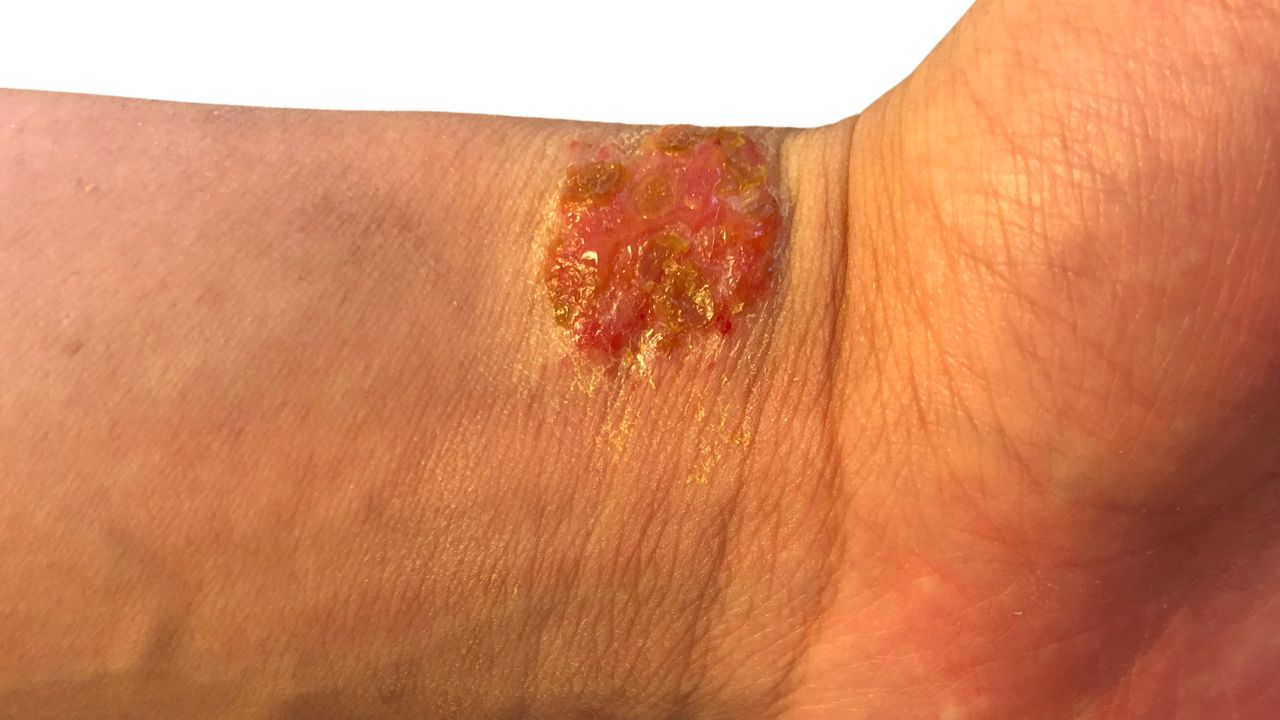
Discoid eczema, also called nummular eczema, shows up as round, coin-shaped patches that are sharply edged and often wet. It is one of the eczema types we see most often at our Orchard Road clinic, and one of the most stubborn.
The patches usually appear on:
- the lower legs and calves
- the forearms and backs of the hands
- the trunk, buttocks and thighs
What makes discoid eczema different is how it behaves. The patches ooze, crust over, look like they are healing, then flare in the same spot again. Many of our patients arrive after months of steroid creams and more than one course of antibiotics.
What Is Discoid Eczema?
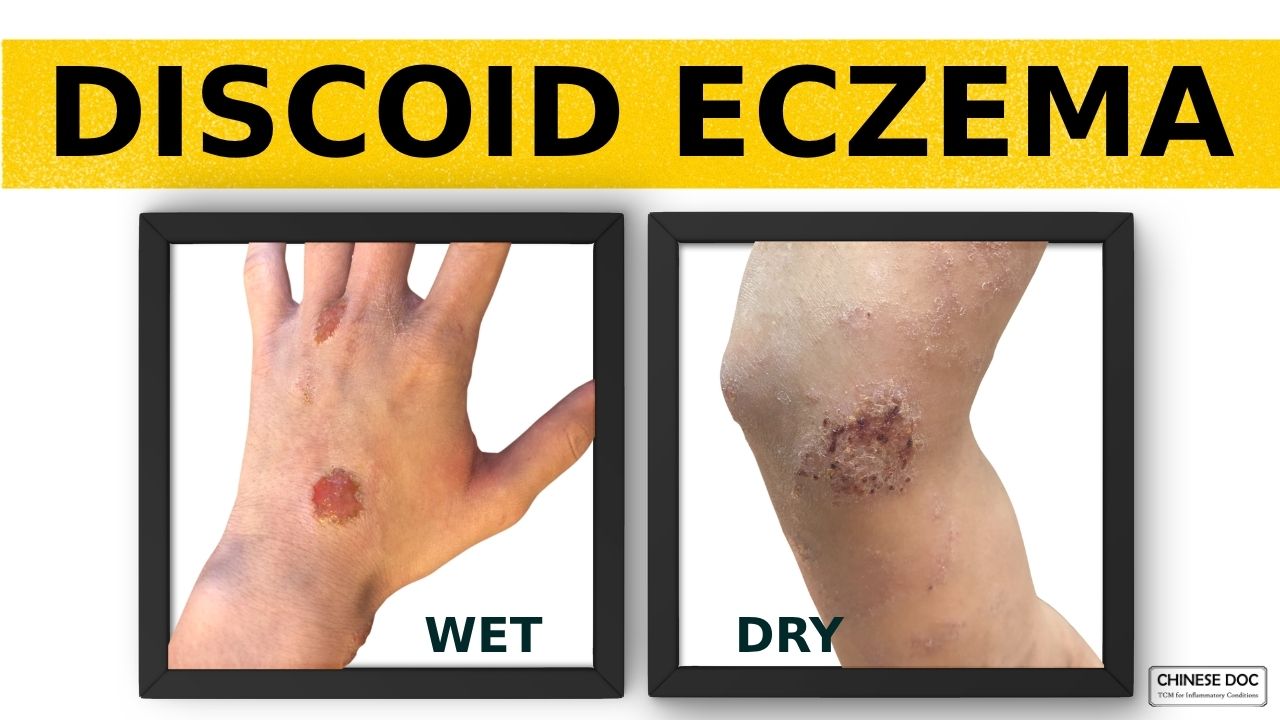
Discoid eczema is a type of eczema defined by its shape. Instead of spreading in a patchy, ill-defined way like typical atopic eczema, it forms distinct circles from about one to several centimeters across.
How it usually develops:
- It starts as a cluster of small bumps or blisters
- These join into a raised, round patch
- The patch weeps clear or yellow fluid, especially after a shower, when the skin is at its softest
- It crusts, appears to settle, then flares again in the same place
- Some patches slowly grow larger over time
How it differs from atopic eczema:
- Shape: round and sharply edged, not diffuse
- Location: legs, arms and trunk, rather than the inner elbows and backs of the knees
- Texture: often wet, weepy and crusted, rather than dry and rough
- Infection: the open, oozing surface is easily colonized by staph bacteria, which is why antibiotics come up so often
Discoid patches can be intensely itchy. Some patients, though, find a patch barely itches at all, which is one reason it gets mistaken for other conditions.
Discoid Eczema vs Ringworm, Psoriasis and Pompholyx
A round patch on the skin is not always discoid eczema. These are the three conditions it is most often confused with.
Ringworm (tinea corporis)
- Ringworm is a fungal infection. Discoid eczema is not
- Ringworm usually clears in the center, leaving a ring with a scaly, active edge
- A discoid patch is evenly inflamed across the whole circle, and often wet
- Discoid eczema does not respond to antifungal cream. If an antifungal has done nothing after a few weeks, that is a clue
Psoriasis
- Psoriasis plaques are thicker, drier and covered in silvery scale
- Psoriasis rarely weeps. Discoid eczema often does
- Psoriasis favors the elbows, knees and scalp. See our guide to eczema vs psoriasis
Pompholyx (dyshidrotic eczema)
- Pompholyx forms deep, itchy blisters on the palms, fingers and soles
- Discoid eczema forms round patches, and can appear on the hands too
- The two often occur in the same patient, and flare together. See our page on pompholyx eczema
If you are not sure which one you have, a doctor can confirm it. Ringworm can be checked with a simple skin scraping.
Why Discoid Eczema Keeps Coming Back: Antibiotic Rebound Flares
Because discoid patches weep and crust, they are often treated as infected. The usual combination is an oral antibiotic plus a steroid-antibiotic cream such as Fobancort. For some patients this works well, and that is the end of it.
For others, a pattern emerges:
- The antibiotic course clears the skin, or controls it for a while
- Soon after the course ends, the skin flares, sometimes worse than before
- New discoid patches appear in places that were clear
- Pompholyx on the hands, if present, flares at the same time
- A cream that “used to work like magic” stops working
This is what we call a rebound flare. It is not always easy to spot, because the flare arrives after the antibiotic has stopped, so it is rarely linked back to it.
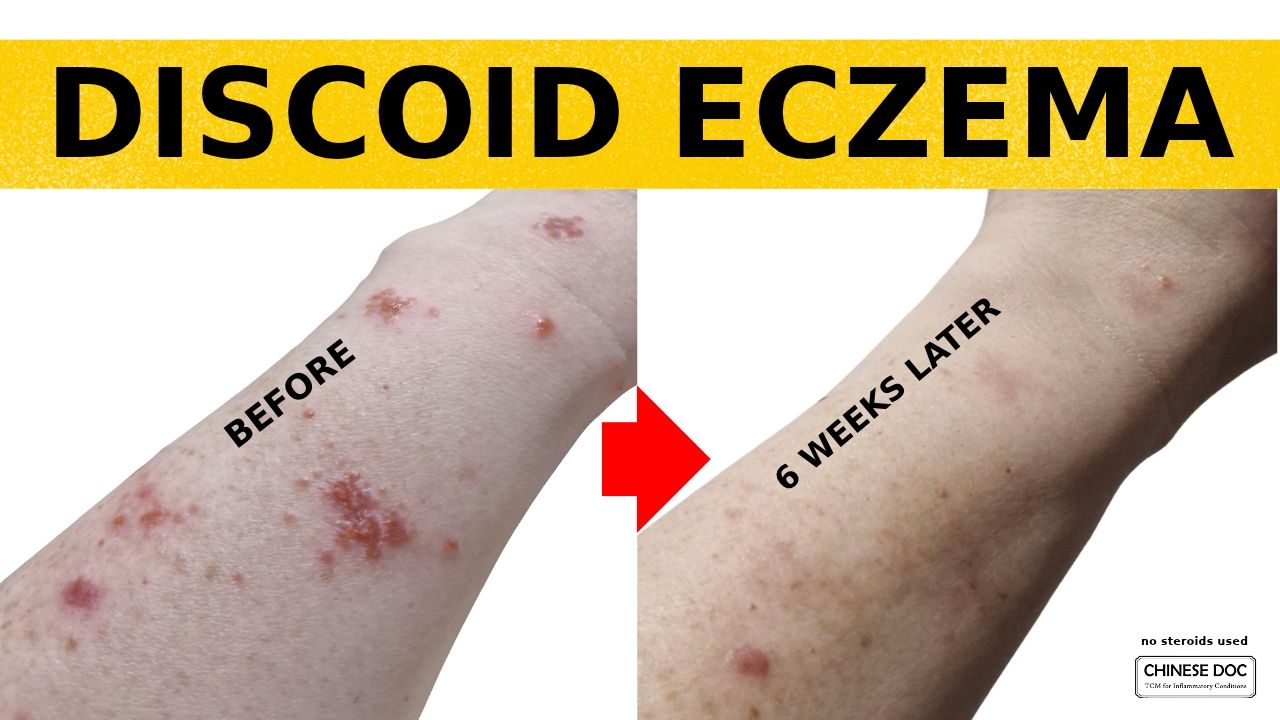
The patient in this video had raised, coin-shaped bumps on her arms that stayed put despite steroid cream, and oozed after every shower. After an antibiotic course she developed new discoid patches across her body, along with a pompholyx flare. Antibiotics and steroid cream together controlled it again, but only for a while.
What to watch for: if your discoid eczema flares within days or weeks of finishing antibiotics, tell your doctor. That timing matters when deciding what to do next.
When Antibiotics Do Not Work: A Discoid Case With MRSA
Antibiotics usually help discoid eczema, at least at first, when the bacteria are sensitive to the drug. This patient was the unusual exception.
Her history:
- Mild eczema as a child, then a major flare behind the knees at puberty
- Years of oral and topical steroids, with stronger creams used more often after stressful life events
- Topical steroid withdrawal (TSW) for seven years, with good phases and bad ones
- Three months before she saw us, the skin changed character, from hot and dry red skin to hot, wet discoid patches
Her response to antibiotics:
- A swab test led to doxycycline, which normally works well. Her skin flared further
- She was then diagnosed with MRSA and given another antibiotic. She developed a rash on it
We treated her with Chinese herbs over two video consultations, 20 days apart. Within two weeks of starting the herbs, the change was significant. Her already clean diet helped a great deal.
The lesson is not that antibiotics are bad. When the bacteria match the drug, they usually work well. When they do not, or the skin rebounds every time, it is worth looking at the internal picture rather than adding another course. If you have TSW, see our page on Chinese herbs for TSW.
Weepy Lesions and Why Moisturizer Can Make Them Worse
The standard advice for eczema is to moisturize. Discoid eczema is the most common situation where that advice does not fit.
A discoid patch is often already wet. Putting a cream or ointment over a lesion that is oozing fluid tends to trap the moisture in, and many patients notice the patch gets worse, not better. The patient in this video had been using moisturizers before he came to see us, and they had aggravated his eczema.
What we tell patients:
- Watch how your skin actually responds. If a cream stings, softens the patch further or makes it weep more, it is not helping
- Do not keep applying a product blindly just because eczema is “supposed” to be moisturized
- Antihistamines often do little for severe eczema. If they are not changing your itch, tell your doctor
- Some patients do well on no-moisturizer treatment (NMT, or moisturizer withdrawal). It is not for everyone, but it is worth knowing about
We are not against moisturizers. If something genuinely makes your skin feel better, that alone helps. The point is to be smart about it. For more on this, see why eczema cream can backfire.
How We Treat Discoid Eczema With Chinese Medicine
In Chinese medicine, wet, weepy discoid eczema is usually read as dampness and heat in the body, pushing out through the skin. The goal of treatment is to clear that dampness and heat from within, rather than only suppressing it at the surface.
What treatment involves:
- Custom Chinese herbs: a formula written for your skin and your body, adjusted as the skin changes
- Acupuncture: for itch and inflammation, where suitable
- Diet: cutting back on foods that add damp and heat makes a real difference. Patients who already eat clean tend to respond faster
- Topical Treatment: we use Eczema Powder to dry up the lesions.
What healing usually looks like:
- Weepy patches dry up first. The skin may then feel dry and itchy, and that is the expected direction of healing
- Occasionally new redness appears in the first few days. We ask patients to update us, so we can judge whether to continue or adjust the formula
- Because the herbs are drying, we ask patients to watch their stool. If it becomes dry, it is time to tweak the formula
Discoid eczema heals slowly. Expect weeks to months, not days. We see patients in clinic, and by video consultation for patients overseas.
What Discoid Eczema Is Called in Chinese
- 钱币状湿疹 (qián bì zhuàng shī zhěn), “coin-shaped eczema”, is the standard modern medical term for nummular eczema
- 铜币状湿疹 (tóng bì zhuàng shī zhěn), “copper-coin eczema”, is a common alternative
- 盘状湿疹 (pán zhuàng shī zhěn), “disc-shaped eczema”, is the direct translation of discoid eczema
In classical Chinese medicine, wet, spreading eczema falls under 湿疮 (shī chuāng), “damp sore”, and 浸淫疮 (jìn yín chuāng), “spreading, seeping sore”. The names describe the dampness that defines weepy discoid patches.
Do not confuse it with 圆癣 (yuán xuǎn), which is ringworm, a fungal infection. For more Chinese eczema terms, see Chinese medicine for eczema.

Who Would Be Treating You
Discoid eczema is usually treated with steroid creams and antibiotics to control the surface. Consider using Chinese herbs to clear the dampness and heat driving it from within.
I’m Dr Mark Chern, PhD, registered with the TCM Practitioners Board of Singapore. I have abundant experience in treating discoid eczema as well as other kinds of eczema since 2013, at 545 Orchard Road.
Book in now to get treatment for Discoid Eczema.
FAQs
Can discoid eczema go away?
Yes, patches can clear completely, but discoid eczema tends to come back, often in the same spot. Treating only the surface usually controls it for a while. Clearing it for longer means dealing with what drives the flares, including rebound after antibiotics.
Is discoid eczema contagious?
No. Discoid eczema itself is not contagious. The weepy surface can become infected with staph bacteria, which is why it is sometimes treated with antibiotics, but you cannot catch the eczema from someone else.
How do I know if it is discoid eczema or ringworm?
Ringworm usually clears in the middle and has a scaly, active edge, and it responds to antifungal cream. Discoid eczema is inflamed across the whole circle, is often wet, and does not respond to antifungals. A skin scraping can rule out ringworm.
Why does my discoid eczema flare after antibiotics?
Some patients get a rebound flare after a course of oral antibiotics ends, with new patches appearing and pompholyx flaring at the same time. Because the flare comes after the antibiotic has stopped, it is often not linked back to it. Tell your doctor about the timing.
Should I moisturize discoid eczema?
It depends on how your skin responds. Wet, oozing patches often do worse under cream or ointment. Watch your skin: if a product makes a patch weep more or sting, stop using it on that patch. Some patients do well on no-moisturizer treatment.
What is discoid eczema called in Chinese?
The standard term is 钱币状湿疹 (qián bì zhuàng shī zhěn), coin-shaped eczema. It is also called 铜币状湿疹 or 盘状湿疹. Classical Chinese medicine groups weepy eczema under 湿疮, damp sore.