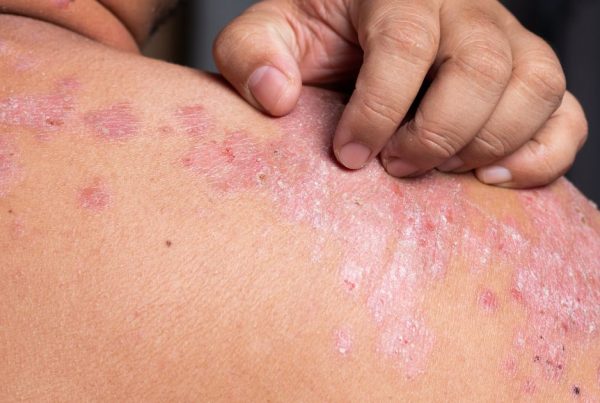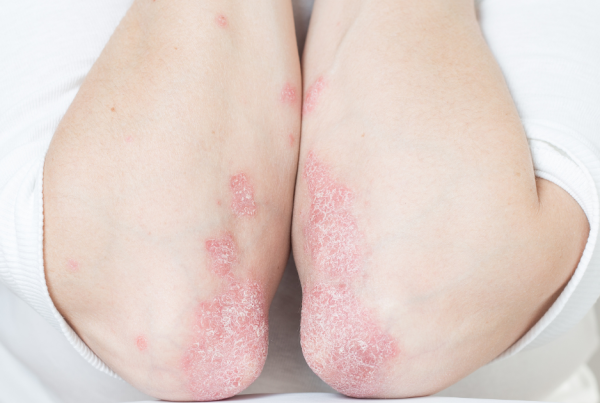


What type of psoriasis do I have? If you don’t know, Psoriasis is an immune-mediated skin disease that most commonly presents as a red, scaly plaques caused by excessive proliferation of skin cells.
Psoriasis is five times less common in Asian than in people of Caucasian descent. The most common incidence is within the 15-30 year (Type I) age group, after which the incident falls, but there is a revival of incidence in the 50-60 year (Type II) age group.
In our clinic, we see more South Asians than East Asians coming in for Psoriasis or Psoriatic Arthritis. That said, South Asians respond really well to Chinese Medicine.
Psoriasis has been recognized in China as a disease condition for at least 2000 years and has had the following names: Gan Xuan (干癣) which means “dry lichen”; She Shi (蛇虱) which means “snake lice”; and Bai Bi (白疕) which means “white crust”; Song Pi Xuan (松皮癣) which means “pine skin lichen”.
So, what type of psoriasis do I have? To get the answers, read our explanation below.
#1 Plaque Psoriasis

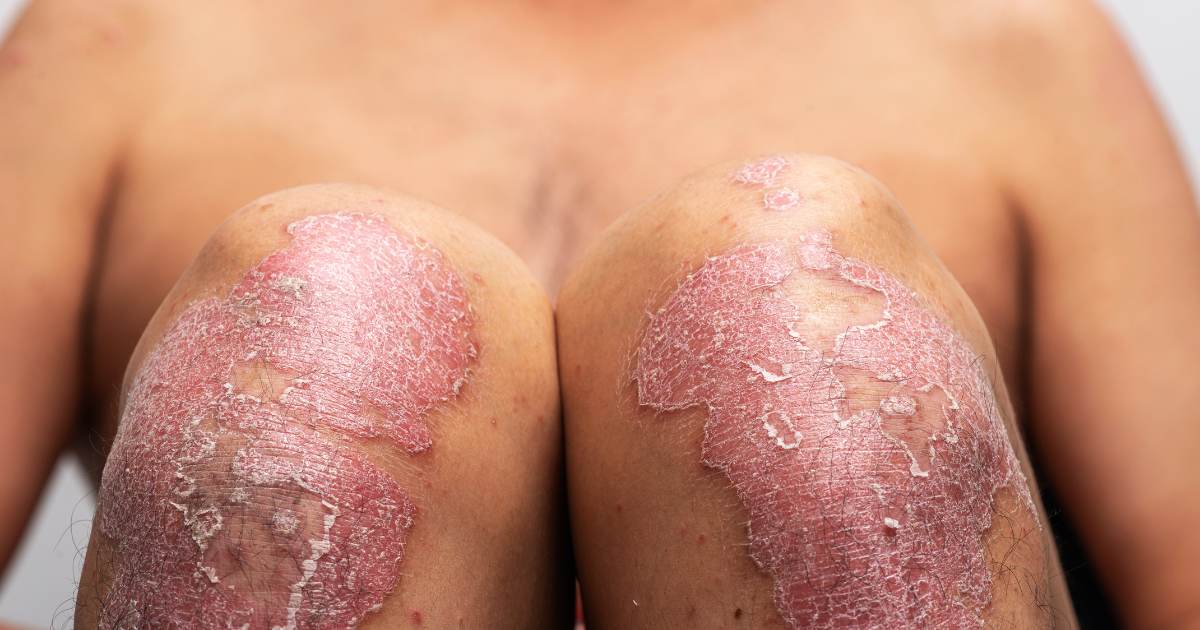
Plaque psoriasis is the most common type of psoriasis. You will see raised, red or purple patches covered with a whitish or silvery buildup of dead skin cells. These patches can appear on the scalp, elbows, knees, and back. You may also suffer from
The image above shows plaque psoriasis on the most common location for psoriasis — over the knee caps.
- Itching
- Pain
- Cracking skin
- Bleeding when you peel on the skin
- Burning and stinging
#2 Guttate Psoriasis

Guttate Psoriasis is commonly seen in children, and the outbreak often surfaces several weeks after an upper respiratory tract infection. It presents as small bumps (papules) that are distributed quite evenly. For children, the lesions often appear on the upper back and torso.
Above we have the first image of an acute flare on the legs. You can see the papular presentation in the most acute form — deep red papular bumps. The second image shows guttate psoriasis lesions that have been managed using steroids. The whitish (hypopigmented) skin is old lesions that have been treated using steroid creams. However, the effect of the topical steroids is wearing out, and you can still see bumps trying to emerge, with silvery flakes on them.
While Guttate Psoriasis can be self-limiting and resolve within a few months, it may also herald the onset of plaque psoriasis.
#3 Pustular Psoriasis

Palmoplantar psoriasis, which can be seen as a variant of palmoplantar pustulosis, is a debilitating condition for those who suffer from it. Using your hands can be very painful if you suffer from the palm variant; walking on the soles of your feet can be very painful if your soles are affected.
The lesions often show up as yellowish pustules which then burst and form brownish crusts with scales. The palms and soles usually appear as slightly swollen and red.
As it resolves, the skin starts to dry up and crack (see images above), which is another type of pain.
There is also Von Zumbusch pustular psoriasis, a more severe presentation with fever and breakouts over large areas of your body.
#4 Erythrodermic Psoriasis
This is a serious progression affecting a small number of people suffering from psoriasis. The whole body is almost fully red, with scaling and erythroderma.
Because it is a systemic affliction, there will be fever and an intense feeling of heat.
Erythroderma is a secondary presentation which may follow from different primary skin conditions, including atopic dermatitis, contact dermatitis or drug eruption (allergy to certain medications). This is also how some people coming in for ‘Topical Steroid Withdrawal’ aka ‘Red Sleeve Syndrome’ present as.
#5 Psoriatic Arthritis
This is when the person suffers from both pain in the joints and psoriasis. The arthritis is often seronegative, and has the following manifestations:
In the video below, we share about a patient with psoriasis and hip joint pain, which was diagnosed as Psoriatic Arthritis.
- Mono or asymmetric oligoarthritis
- Arthritis of the distal interphalangeal joints (DIPs)
- Rheumatoid arthritis-type presentation
- Arthritis mutilans
- Spondylitis/sacroilitis
#6 Inverse Psoriasis
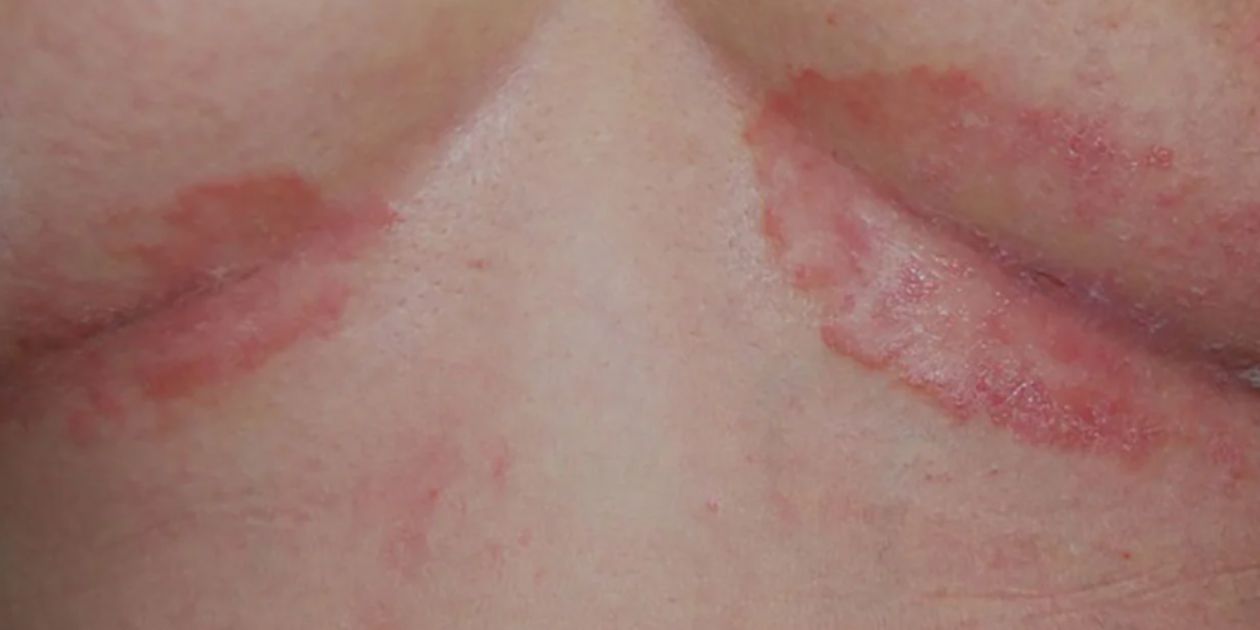
Inverse psoriasis is found in skin folds such as the armpits, groin, under the breasts, and other areas where skin rubs against skin. Symptoms include red, shiny patches that may be smooth and moist, often accompanied by itching and pain from cracks or fissures. See above image of psoriasis lesions under the breast folds.
This condition is caused by a combination of genetic and immune-mediated factors, with triggers including infections, stress, medications, and skin irritation. Treatment options include topical corticosteroids, systemic medications, biologics, and phototherapy. Home care practices such as keeping the area clean and dry, using loose clothing, and applying powders to absorb moisture can also help manage symptoms.
#7 Nail Psoriasis

Nail psoriasis affects the fingernails and toenails, causing changes in nail appearance such as pitting, discoloration, and thickening. Nails may also become loose or detach from the nail bed.
This condition is caused by the autoimmune disease where the immune system attacks the skin cells, leading to inflammation and rapid growth of skin cells. Treatment involves a combination of topical treatments, oral medications, and biologics, as nail psoriasis can be challenging to treat.
#8 Scalp Psoriasis

Scalp psoriasis start off as little bumps on the scalp (see above first image) and progress to the formation of scaly, red patches. Symptoms include itchy, scaly patches on the scalp, which can cause hair loss and discomfort. There are also lesions that grow along the hair line, leading to skin damage in the outer edges of the scalp (see second image).
This condition is caused by the autoimmune disease where the immune system attacks the skin cells, leading to inflammation and rapid growth of skin cells. Treatment options include topical treatments such as shampoos and creams, oral medications, and phototherapy. Biologics can also be used for severe cases.
Conclusion
FAQs
Can you have 3 types of psoriasis?
Yes, it is possible to have multiple types of psoriasis. Psoriasis is a chronic skin condition characterized by the rapid buildup of skin cells, leading to scaly patches. Different types of psoriasis can affect different areas of the body and have distinct symptoms. For example, a person could have plaque psoriasis, guttate psoriasis, and scalp psoriasis simultaneously.
What is the most serious psoriasis?
Erythrodermic psoriasis is considered the most serious type of psoriasis. It is a rare and potentially life-threatening form characterized by widespread, fiery redness and severe itching. The skin can become extremely itchy and painful, and the condition can lead to severe dehydration and malnutrition if left untreated. It is often triggered by severe psoriasis that is not adequately treated.
What is the difference between psoriasis and plaque psoriasis?
Psoriasis is a general term for a chronic skin condition characterized by the rapid buildup of skin cells, leading to scaly patches. It can affect various parts of the body, including the scalp, elbows, knees, and lower back.
Plaque psoriasis, also known as psoriasis vulgaris, is the most common type of psoriasis. It is characterized by thick, red, or purplish patches of skin with silvery-white scales. These patches often appear on the elbows, knees, lower back, and scalp. Plaque psoriasis is the most common form, affecting up to 80-90% of people with psoriasis.
Can you have psoriasis without plaques?
Yes, it is possible to have psoriasis without plaques. Psoriasis can manifest in various forms, including:
- Guttate psoriasis: Characterized by small, red, or discolored spots caused by inflammation, often appearing on the arms, legs, and torso.
- Inverse psoriasis: Causes smooth, inflamed patches in skin folds, such as under the breasts, in the armpits, or around the groin.
- Pustular psoriasis: Features pus-filled blisters on the palms, soles, or other areas of the body.
- Scalp psoriasis: Affects the scalp, forehead, back of the neck, and skin around the ears, often appearing as powdery, silver, or white scales.